OA
Loading
Dubai — Tokyo
Loading
The craft is silent. We are not.
A holding company that buys Japan's century-old craft houses before they close, keeps the maker at the bench, and turns each one into a named luxury brand.
Visit Always Make Noise
Demand has never been louder. Supply has never been quieter. We live in the gap.
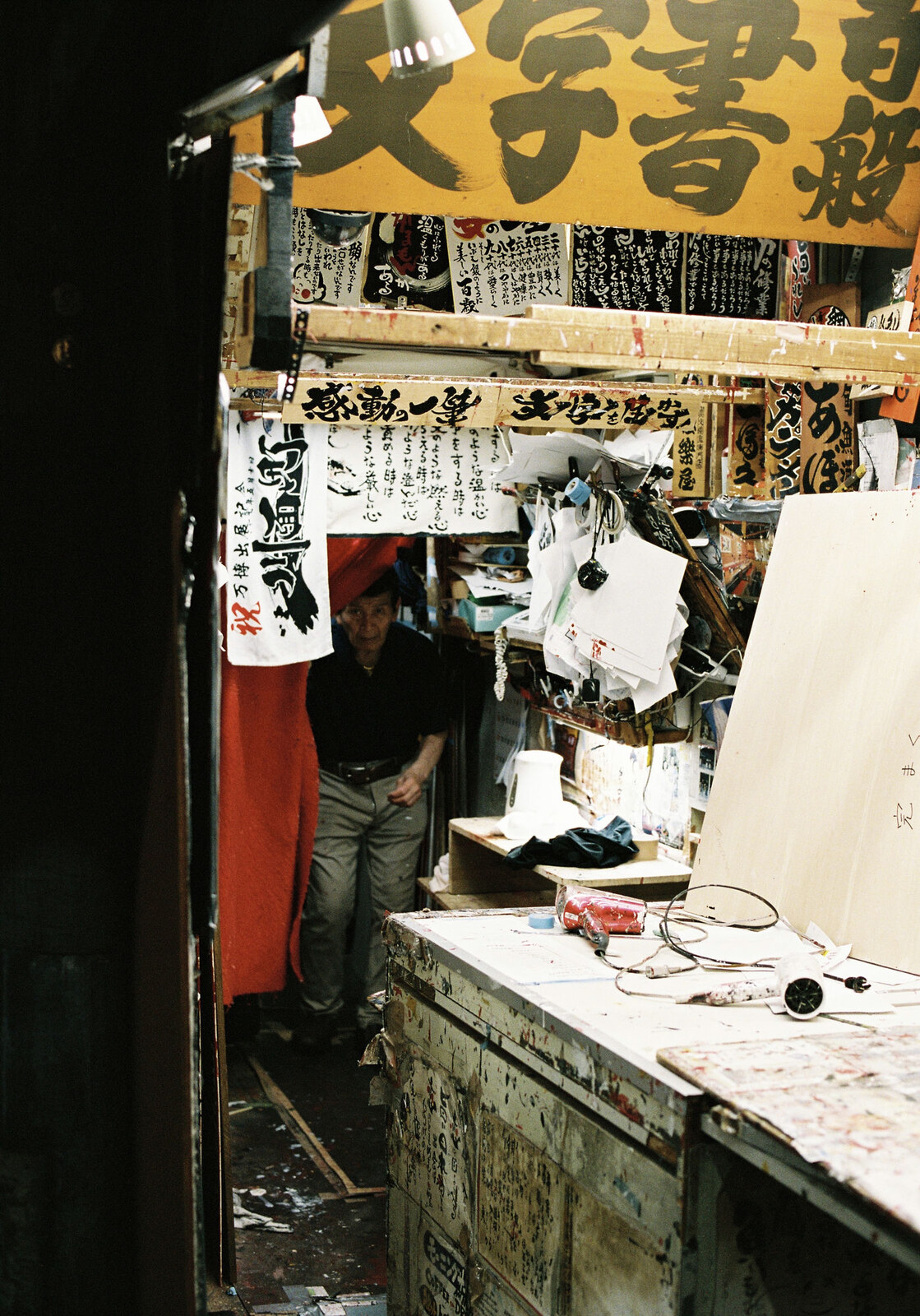
Japan has thousands of shinise — houses that have made the same thing, by hand, for a hundred years or more. One master. Three generations of technique. A workshop most of the world will never find.
They are going quiet. The masters are old. The kids left. Output is down 84% since 1983. There were 288,000 artisans in 1979. Today, 54,000. More than half of these houses have nobody to take over.
So the most beautiful supply on earth is closing, one master at a time. Not because it failed. Because nobody is left to inherit it.
Hermès, LVMH, Loro Piana are already in Japan, quietly courting the same workshops. They want the craft. They will not put the maker's name on it. It vanishes inside their own.
We do the opposite. We buy the house. We keep the hand. We give it a name, a stage, and the world.
First is Toshi Nagaoka. Leather couture out of Osaka, every piece by one pair of hands, technique passed down three generations. It debuts at Paris Fashion Week in January 2027.
One maison is a lovely business. Fifty is a category nobody can copy.
What we own is not a logo. It is the right to a century of craft that would otherwise disappear. Thousands of these workshops exist, and they are all coming up for sale at once, for the first and last time. You get one window. This is it.
My thinking, plainly
Buy Japan's century-old craft houses while their owners are forced to sell, give them a name and a stage, and stack a portfolio of brands nobody else can assemble.
Japan holds more living craft than anywhere on earth, and a demographic accident is putting it on the market all at once. Tens of thousands of century-old workshops have no heir, and a 55% inheritance tax forces a sale when the owner dies. The biggest luxury houses are paying record prices for exactly this supply — then they bury the maker's name inside their own. Always Make Noise does the reverse: buy the house, keep the artisan at the bench, build the workshop into a brand under its own name, sell at luxury prices. Do it once and you have a brand. Do it fifty times and you own a category nobody can copy, because the assets are finite and they are disappearing.
Real craft is the one thing the big houses cannot manufacture. They have spent a decade hunting for it in Japan. Here is the part nobody priced in: the bottleneck just flipped.
For a hundred years these workshops were never for sale. The family held them. Now the family is gone, the founder is past seventy, and a 55% inheritance tax means the house either changes hands or shuts. The thing everyone wants is being sold by the people in the weakest position to negotiate. That is the whole game.
Four things line up now that did not five years ago.
The window stays open only as long as this generation of masters does.
Always Make Noise is not a product. It is a holding company that does three things, in order, over and over.
First house: Toshi Nagaoka. Leather couture from Osaka, debuting at Paris Fashion Week in January 2027. Every house after it runs the same three steps. The holding owns them all.
The wedge is a single house. One leather maison, debuting in Paris, priced at the top. It has to prove one thing: an unknown Japanese artisan can become a named luxury brand at luxury prices.
When that works, it grows two ways. More houses — leather is one craft, but there are also knives, textiles, ceramics, lacquer, sake, each with its own dying masters and its own export demand. And more reach per house — start in Paris, then move through the stores, wholesale accounts, and online channels luxury already runs on.
The reachable market for exportable Japanese craft luxury is, very roughly, low single-digit billions today and growing. But the size does not come from the market. It comes from the spread. We buy cheap because the owner has no heir and has to sell. We sell dear because the craft is real and the name is on it. Buy a house for the price of a workshop, build it into a brand worth many times that, repeat. Compound that spread house after house and you get a very large company.
Two edges, and they feed each other.
First, the assets are gone once they are gone. A hundred years of technique cannot be built from scratch or bought back. Every house we acquire is one fewer in the world, and one fewer a rival can ever touch. The supply only shrinks, and we hold a growing slice of it.
Second, the name. LVMH and Hermès buy the workshop and fold its name into theirs. So the named-brand version of this category is sitting wide open. We build each artisan into a brand under their own name. That wins two relationships at once: the seller picks us because the family name survives instead of vanishing, and the customer pays us because the story leads back to one real hand.
A portfolio of named, irreplaceable heritage brands gets stronger as it grows. It never turns into a commodity.
Jay Charlec has built and run direct-to-consumer brands since 2018, across four continents, and broken into markets — Korea among them — that few Western operators ever reach. This venture needs three things at once: relationships in Japan, taste in Paris, capital sense in Dubai. He works in all three.
My part is the part you cannot buy. I am fundraising-in-chief. I help the company raise its first funding and open the rooms where luxury capital sits — I do not write the check myself. I bring guidance on building a house of brands, the hiring infrastructure to staff it, and a network across luxury, media, and the Gulf that turns one Paris debut into a category story. The model is right. My job is to make it fundable, staffable, and seen.
Once in a generation, the best craft in the world goes cheap because the people who own it can no longer keep it. That is happening in Japan now. It will not happen again.
I am betting the right operator can buy these houses while they are forced to sell, keep the hand that makes them rare, and build them into names the world pays luxury prices for. Prove it once with Toshi Nagaoka in Paris. Repeat it across a portfolio. Then you own a category nobody can rebuild.
The craft is silent. The bet is that we are not.
Hands-on, from zero. With singular people.