OA
Loading
Dubai — Tokyo
Loading
Pink soda ruins the world. A janitor saves it.
Gloops is an animation IP — a 3D action-comedy series, a faction game, and a toy line — built on a rig that spits out infinite characters from one setup.
Visit Gloops
Green juice versus pink soda. A kid named Po becomes a masked hero. That's the whole pitch, and the whole world.
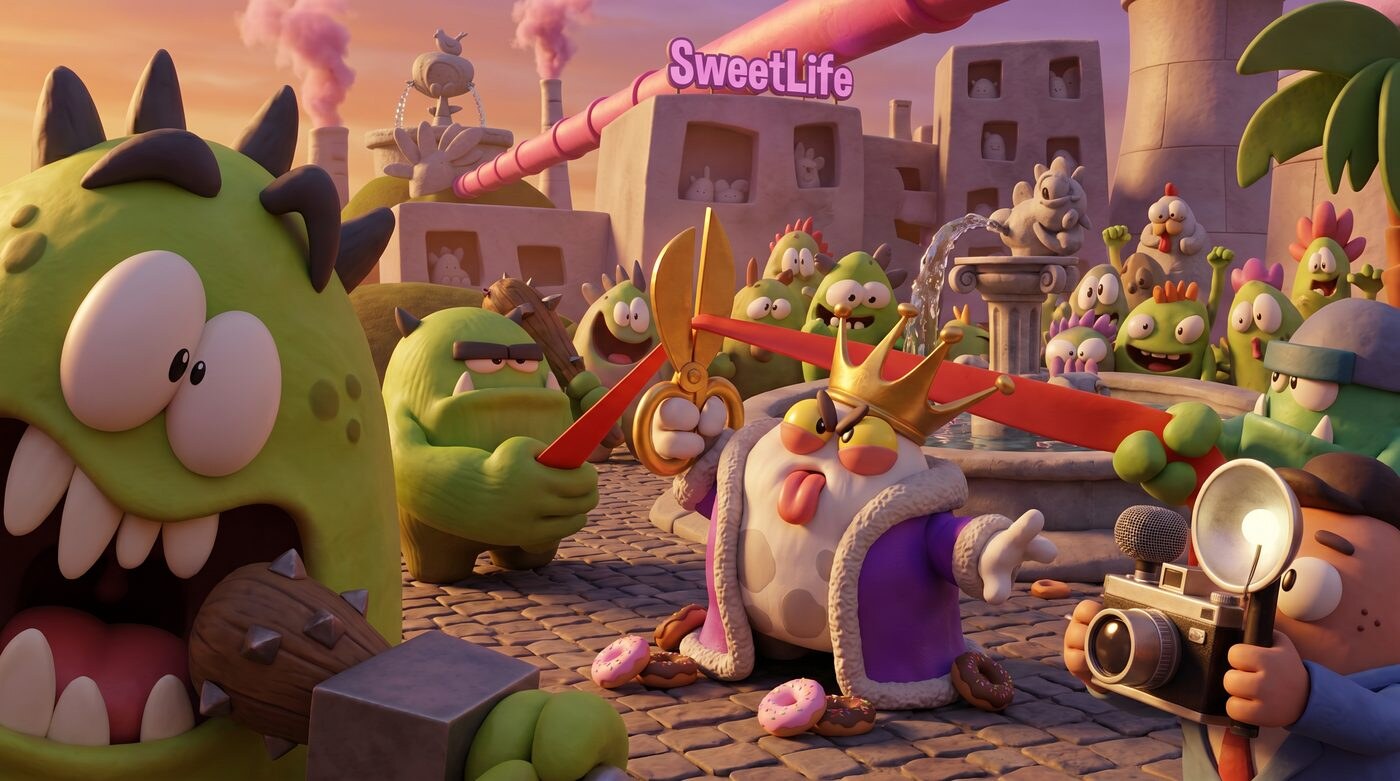
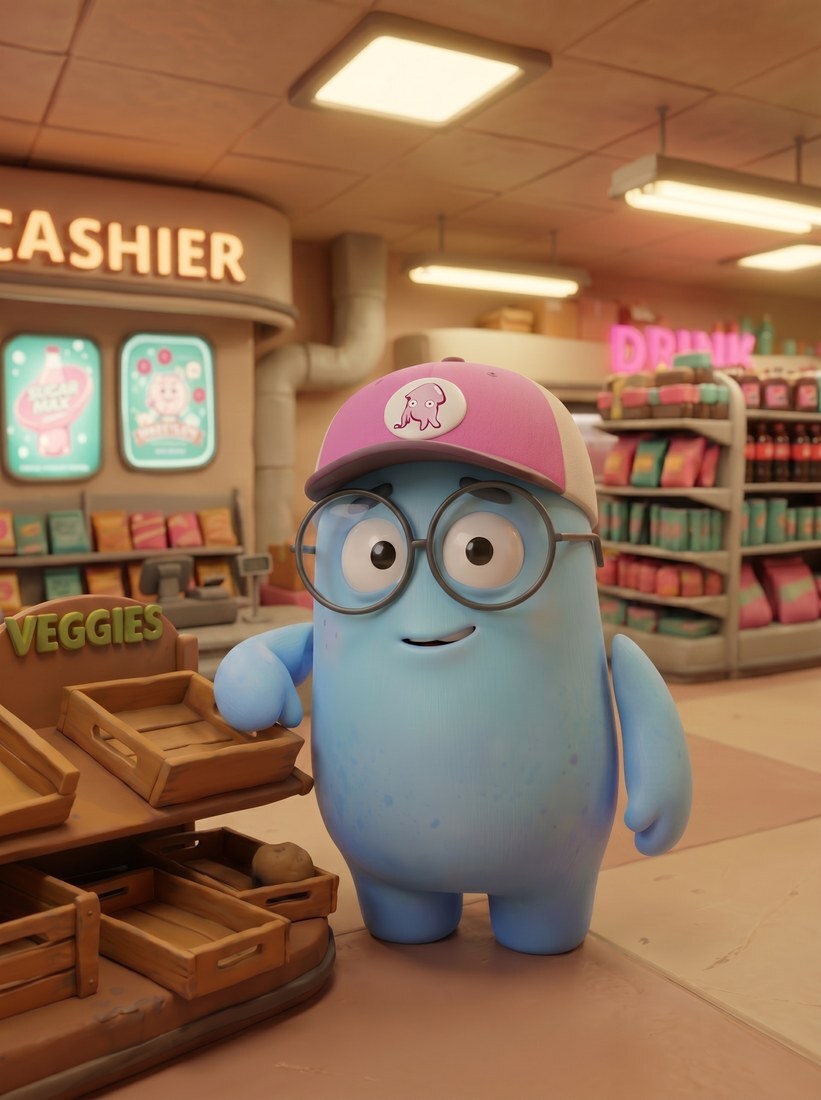
A company called SweetLife Industries gets a planet of little creatures — the Gloops — hooked on a pink soda named SugarMaxX. The tap water turns pink. The Gloops go feral.
Po is a clumsy supermarket sweeper. By accident he becomes MushMaster, a masked hero, and starts a resistance with taste. The antidote is green juice. The whole show runs on one tension you can read from across the room: green versus pink. Resistance versus empire.
Junk food versus nature, told as a fast, dumb-smart action-comedy. Kids get it. Parents get the joke underneath it.
Gloops is an IP, not an episode. Four pillars, and they feed each other.
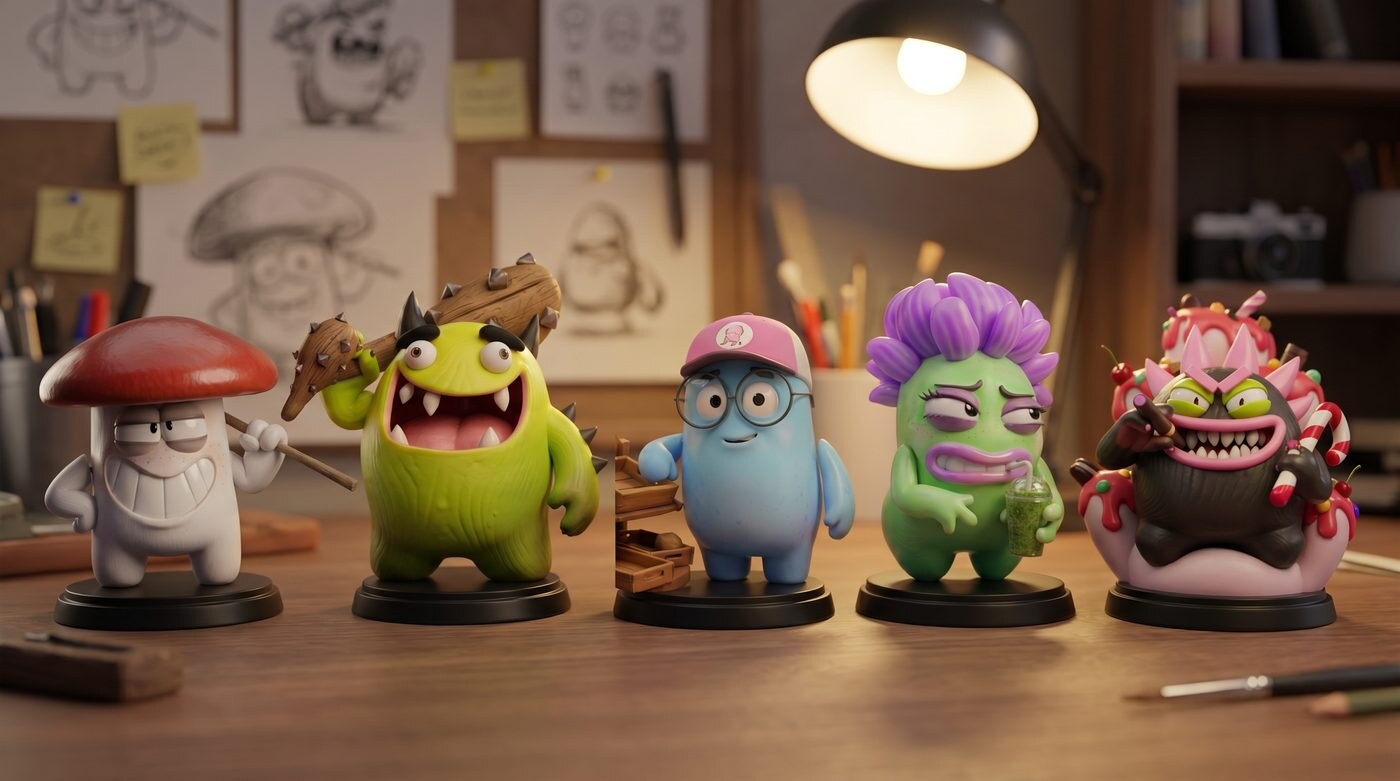
Behind the show is the boring part that wins. Mooncake built a rig that turns one character setup into millions of unique Gloops — breed, horns, tongue, a 22-color palette, a portrait card out in about 150 milliseconds.
One rig, infinite characters, at a cost you control. That's what makes a series, a game with a roster, and a toy catalog the same project instead of three. Most studios would need three teams. Mooncake needs one rig.
My thinking, plainly
An irreverent kids franchise — series, game, toys — built around one thing that breaks the math: a rig that mass-produces unique characters at near-zero marginal cost.
The franchises that print money for decades are the silly ones with great characters: Rabbids, Trolls, Gumball, the blind-box toys kids line up for. They win on three surfaces at once — you watch them, you play them, you buy them. Gloops is built for all three from day one. A 3D action-comedy with a premise a child can repeat (green juice fights pink soda) and a villain — sugary brand addiction — that kids and parents both recognize on sight. The edge underneath is technical. Mooncake's rig renders unique characters from one setup in milliseconds. A series needs a cast. A game needs a roster. A toy line needs variants. All three usually mean three production budgets. Here they share one engine. The bet: a designed-for-merch IP, with a real studio behind it and a rig that collapses the cost of a thousand characters, is how you build the next franchise that lives on screens, in games, and on shelves.
Most animation is designed for the screen and then squeezed onto a toy shelf later, badly. Gloops does it backwards. The creatures are cute villains — shapes built to read as a blind-box figurine first, a character second.
That sounds small. It's the whole thing. A silhouette that works as a toy also works as a meme, a game avatar, a thumbnail. The villain you can hold sells the show that sells the game.
Green versus pink does the same work. A brand, a faction system, and a plot, all in two colors. You can build a series, a game, and a toy aisle on a rule that simple.
Two things line up.
When the thing that gated a business gets cheap, the people who industrialize it first take the ground.
A single world spread across four surfaces that sell each other.
Underneath all four: a rig that renders a unique Gloop portrait in about 150ms from a 22-color palette and a handful of breed parameters. One asset, millions of Gloops. The show, the roster, and the toy variants come off the same line.
The play is the flywheel that Rabbids, Trolls, and the blind-box brands already run.
Start where it's cheap to test love: a customizer people can play, characters people can meme. If the Gloops stick, the series gives them a story, the game gives them a fight, the toys give them a shelf. Each surface reuses the same world and the same fans, so the next product is cheaper than the last.
The rig is what makes this real instead of a deck. A faction game needs a big roster. A toy line needs constant variants. A second season needs new characters. Normally that's a tax on the franchise. Here it's one render call.
Gloops positions against franchises that won on exactly this combination — series, game, retail. The prize is the licensing, games, and content slice of that world. The rig is the reason a small studio can chase it.
First edge: the rig. One setup, millions of unique characters, milliseconds each. A competitor can make one good Gloop. Making ten thousand of them, cheaply, for a game and a toy line, is a different problem — and it's the one Mooncake already solved.
Second edge: the design discipline. Building characters as toys first is a taste call, not a tool. It's why the same creature works as a figurine, a meme, and a game avatar with no extra work.
Third edge: affection. Anyone can render an animation now. Nobody can prompt a kid into loving a character. Once that happens, the attachment is the moat, and it deepens with every episode, level, and figure. Low cost gets you the shots on goal. Love is what you can't copy.
The IP is produced by Mooncake Studio, an independent animation house running since 2017 — bible, character design, modeling, rig, fur, lookdev, rendering, the full pipeline. The site claims past work on Netflix, Canal+, and AAA gaming; I'm stating that as their claim, not as something I've checked. What I can point at is the rig itself, which is built and running.
My role is the one I play in everything I build. I'm fundraising-in-chief — I open doors and help raise the first funding, I don't put in cash. I bring the hiring infrastructure to grow the team, the network to reach broadcasters, licensing, and game partners, and the job of keeping the brand sharp as it scales.
The target is the one I hold every venture to: breakeven with salaries paid, or first funding, inside six months. A studio that earns its keep.
Most people make a show and hope it becomes a franchise. Gloops starts as a franchise — characters designed for toys, a world split into game factions, a premise a kid can repeat — and uses a rig that makes the cast nearly free.
The bet is that a designed-for-merch IP, a real studio, and a rig that mass-produces unique characters is how you build the next Rabbids. Green juice versus pink soda. If the Gloops land, it's not a show. It's a world with a game, a shelf, and a factory that keeps making more of it.
Hands-on, from zero. With singular people.